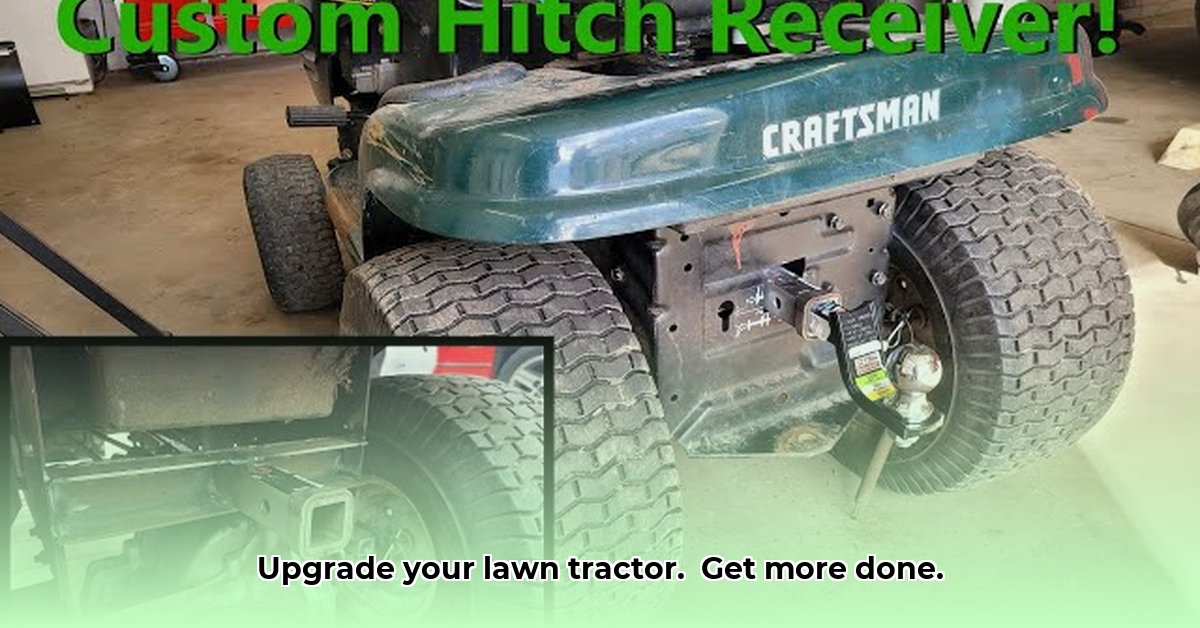
Getting the right hitch for your lawn tractor significantly impacts efficiency and ease of use. Choosing the correct hitch is crucial for preventing damage to your equipment and ensuring safe operation. This guide will help you navigate the various hitch options, select the best one for your needs, and maintain it properly. For more information on tractor parts, check out this helpful guide on Troy-Bilt Belts.
Understanding Your Receiver Hitch Options
Several types of receiver hitches exist, categorized by numbers (Category 1, 2, 3, etc.). These categories signify the hitch's size and towing capacity. The higher the category number, the greater the weight capacity. This directly relates to the size and weight of the implements (attachments) you can use with your tractor.
- Category 1: Suitable for smaller, compact tractors and lighter implements like small mowers or seed spreaders.
- Category 2: Ideal for medium-sized tractors and moderately heavy implements, such as larger mowers or aerators.
- Category 3: Designed for larger tractors and heavy-duty implements including large tillers or trailers.
Choosing the right category is critical. Using a hitch with insufficient weight capacity is extremely dangerous and can lead to equipment failure. Conversely, an excessively large hitch might be unnecessary and create handling issues. Always consult your tractor's owner's manual to determine the appropriate hitch category.
Selecting the Perfect Hitch: A Practical Guide
Selecting the optimal hitch involves careful consideration of several key factors:
- Tractor Specifications: Your tractor's weight capacity and power output directly influence the maximum hitch category it can safely handle. Never exceed the manufacturer's recommendations.
- Implement Weight: The hitch must support the weight of the heaviest implement you'll use. Overloading leads to dangerous situations and potential equipment damage. Always check implement weight specifications.
- Intended Tasks: Different tasks necessitate different hitch capacities. Regular mowing requires a smaller hitch compared to tasks involving heavy-duty implements like tillers. Assess your planned usage carefully.
- Budgetary Considerations: Hitches vary in price. Weigh the cost against your needs and frequency of use. A heavy-duty hitch may be justified for frequent, heavy use, while a lighter-duty hitch might suffice for occasional tasks.
Here's a comparison table (note: weight capacities are estimates; always refer to manufacturer specifications):
| Hitch Category | Approximate Weight Capacity (lbs) | Suitable Implements | Typical Tractor Size |
|---|---|---|---|
| Category 1 | Up to 1000 | Mowers, small tillers, spreaders | Compact Tractors |
| Category 2 | 1000 - 3000 | Larger tillers, aerators, small trailers | Mid-size Tractors |
| Category 3 | 3000 and above | Heavy implements, large trailers | Large Tractors |
Installing and Maintaining Your Hitch
Proper installation and consistent maintenance are essential for safety and hitch longevity.
Installation:
- Safety First: Always read the manuals for both your hitch and tractor before beginning installation.
- Secure Attachment: Attach the hitch to the tractor's receiver, ensuring correct bolt placement and tightening to the specified torque. Improper tightening can damage your equipment.
- Thorough Inspection: Before operation, double-check all connections for secure fastening.
- Test Run: Before heavy use, test the hitch with a light load to ensure functionality.
Maintenance:
- Regular Inspections: Periodically inspect for wear, loose bolts, or damage.
- Lubrication: Keep moving parts lubricated to prevent seizing and extend hitch life.
- Bolt Tightening: Regularly check and tighten bolts (avoid over-tightening).
- Replacement: Replace damaged parts immediately.
Safety First: Precautions When Using Your Hitch
Prioritizing safety is paramount. Always:
- Match Hitch to Implement: Use the correctly rated hitch for the weight of your implements. Never exceed weight limits.
- Secure All Connections: Double-check that all connections are secure before operation.
- Exercise Caution with Heavy Implements: Extra vigilance is required when working with heavy attachments.
- Wear Safety Gear: Use appropriate safety gear, such as gloves and eye protection.
- Operate Responsibly: Never operate equipment while tired, impaired, or under the influence of substances.
Smart Hitches and Precision Agriculture
Modern hitch systems are increasingly integrating with GPS technology and sensors, enabling precise application of fertilizers and other inputs. This precision agriculture approach enhances efficiency and minimizes waste, promoting sustainability.
Choosing the right receiver hitch is vital for efficient and safe lawn tractor operation. By carefully considering your tractor's capabilities, your intended tasks, and prioritizing safety, you'll maximize your productivity and minimize risks.